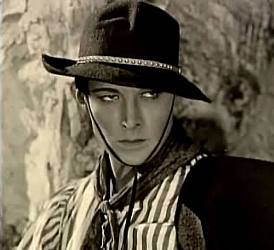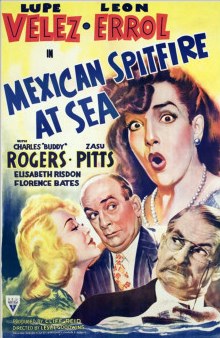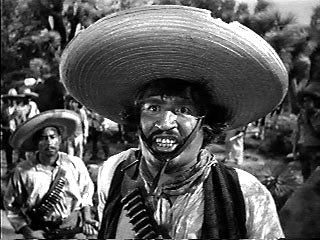
Brownface!
Racist Latino StereotypesHispanic Americans, like many other minority groups in the
US, have long suffered from the effects of racial stereotyping. Typical stereotypes include: the Greaser, the Lazy Mexican, the Latin Lover, the
Mamacita, maids, slum dwellers, drug addicts, gang bangers, feisty Latinas,
the Mexican Spitfire, and the Exotica. |
|
|
|
The Domestic Hispanic domestics are a staple in media depictions of affluent American
families. The Hispanic Maid and Gardener stereotypes speak heavily accented
English liberally sprinkled with Spanish words and phrases. |
|
|
|
|
|
|
|
What these stereotypes all have in common is that they reduce to a one-sided, superficial and exaggerated depiction the real variety and depth and complexity of a struggling people. Significantly, the underlying social issues affecting Latino life in the United States have seldom been addressed in Hollywood films, and hardly ever have Latinos been portrayed as people in control of their lives, capable of standing up for their rights, or having an interest in their own future. History of Racist Attitudes Towards Latinos in AmericaHispanics have been portrayed by the media as lazy, unintelligent, greasy, criminal, and alien. Their contributions culturally, economically, and historically have never been properly documented or appreciated. Instead, Hispanics in general, and American Hispanics in particular, have been the victims of racist stereotyping in an unbroken string of images and portrayals that began with the battle over Mexican land in the Southwest as America expanded during the frontier era. In the United States, especially in the Southwest, Manifest Destiny meant taking land from Mexico, displacing Mexican landowners, subjugating the natives, and exploiting them as cheap and expendable labor. In order to rationalize the displacement of the Southwest Hispanics, as they had done with American Indians in the East, Latinos - whether U.S. citizens, newly arrived migrants from the south, or Latin Americans in their own countries - were thought of as lesser humans. During the California Gold Rush, as many as 25,000 Mexicans arrived in California. Many of these Mexicans were experienced miners and had great success mining gold in California. Some Whites believed their success was a threat and began intimidating Mexican miners with violence. Between 1848 and 1860, at least 163 Mexicans were lynched in California alone. An anti-Mexican law enacted in 1855 in California was thinly disguised as an anti-vagrancy statute but commonly known as The Greaser Act. The law defined a vagrant as "all persons who are commonly known as 'Greasers' or the issue of Spanish and Indian blood... and who go armed and are not peaceable and quiet persons." The law was repealed a few years later. In the 1940s, imagery in newspapers and crime novels portrayed Mexican American zoot suiters as criminals. Anti-zoot suiters sentiment sparked a series of attacks on young Mexican American males in Los Angeles which culminated in what became known as the Zoot Suit Riots. During the worst of the rioting approximately 5,000 servicemen and civilians gathered in downtown Los Angeles and attacked Mexican-American zoot suiters and non-zoot suiters alike. Hollywood operates on stereotypes as a shorthand way of defining characters in ways that are easy for audiences to identify and digest. But a steady diet of negative stereotypes as portrayed in the media can be very destructive to young people if there are also very few positive role models that they can identify with.
|
|

Buy a No
Soliciting Sign
That Really Works!
|
|
|
 |
Brownface! - ContentsBrownface History in Film and TV
How Racial Stereotyping of Latinos
"South of the Border" |
|
|
|||||
|
|
|
|
|
|
|
Racial and Racist Stereotypes in Media |
|||||
|
|
|||||
| Please visit our partners: |
| Kachina.us - Guide to Hopi Kachina Dolls |
| Buy * Will Write for Food * T-shirts, coffee mugs, etc. |
| Agile Writer -- Biography and History |